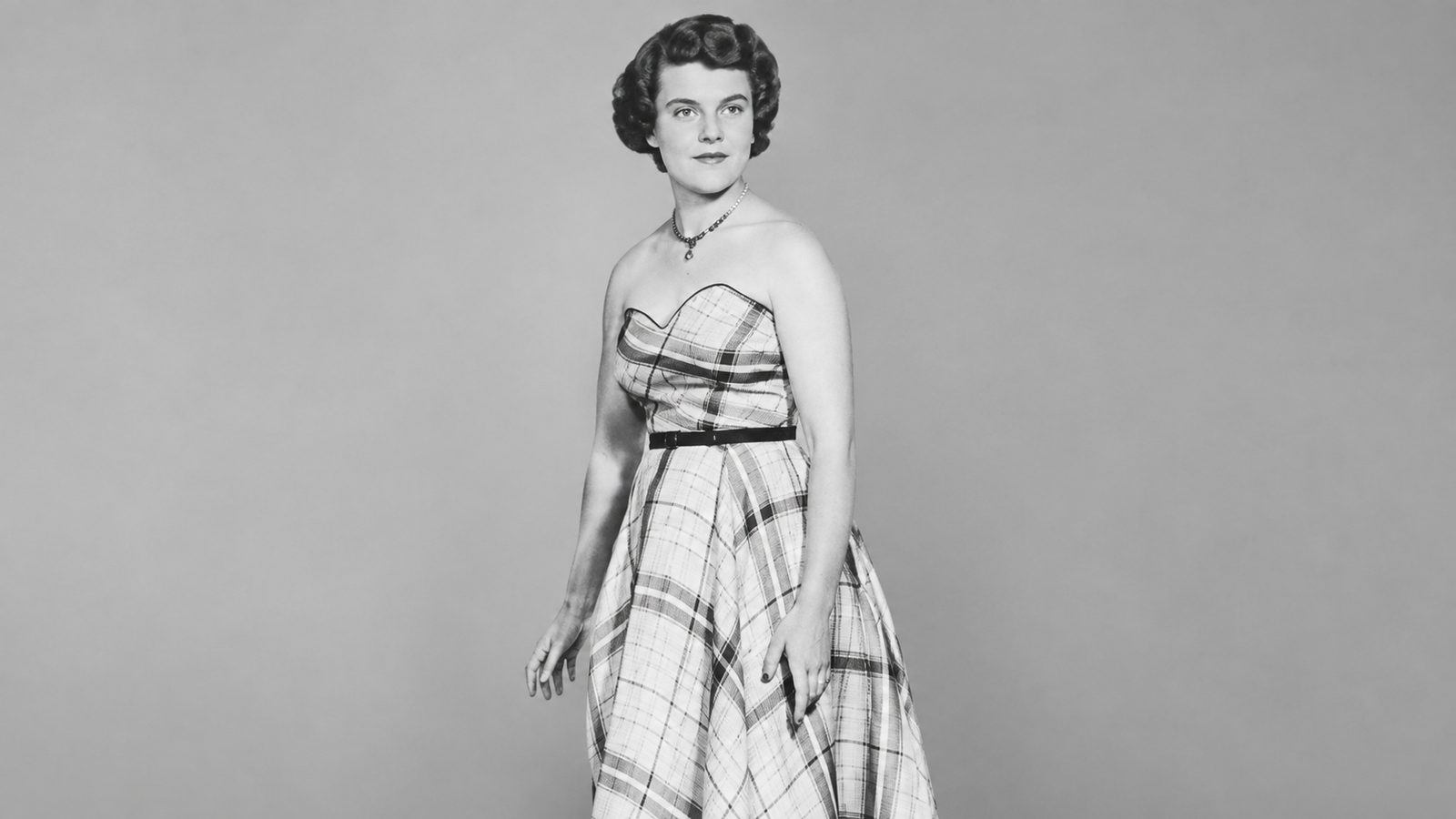
Suzanne Farrington was the only child of legendary British actress Vivien Leigh and barrister Herbert Leigh Holman. Born Suzanne Mary Holman in London in 1933, she grew up in the shadow of one of the most celebrated actresses of the twentieth century. Her mother became internationally famous for roles such as Scarlett O’Hara in Gone with the Wind and Blanche DuBois in A Streetcar Named Desire, while Suzanne chose a considerably quieter path.
Although Suzanne briefly explored acting and studied at the Royal Academy of Dramatic Art, she did not build a long professional career in the entertainment industry. She later married Robin Farrington, raised three sons and maintained a largely private life away from the intense publicity that surrounded her famous mother.
Suzanne also played an important role in preserving Vivien Leigh’s legacy. After Leigh’s death in 1967, Suzanne became responsible for a large collection of her mother’s personal and professional papers. The material later became important to biographers and researchers and eventually formed part of the extensive Vivien Leigh archive held by the Victoria and Albert Museum.
Who Was Suzanne Farrington?
Suzanne Farrington was born Suzanne Mary Holman on October 12, 1933, in London, England. She was the daughter of Vivien Leigh and Herbert Leigh Holman and remained Vivien Leigh’s only child.
Her childhood began before Leigh reached the height of her fame. By the time Suzanne was growing up, however, her mother had become one of the best-known actresses in the world. Leigh’s success created an unusual family environment in which international fame and private family life existed side by side.
Suzanne eventually adopted the surname Farrington after marrying Robin Neville Farrington in 1957. Unlike her mother, she did not seek a life in the public eye. Her story is therefore best understood not as that of another celebrity, but as the story of a woman whose life was closely connected to one of the most important actresses in film and theatre history.
Suzanne Farrington and Vivien Leigh
The relationship between Suzanne Farrington and Vivien Leigh is central to understanding Suzanne’s life. Suzanne was born when Leigh was still developing her acting career, but she witnessed the dramatic transformation of her mother into an international star.
Photographs from Suzanne’s childhood show her with Vivien Leigh during the 1930s. These images provide a rare glimpse of Leigh not simply as a glamorous actress but as a mother with a young daughter.
As Leigh’s career developed, family life became increasingly complicated. Her marriage to Herbert Leigh Holman ended, and Leigh later married actor Laurence Olivier. Suzanne consequently grew up in a family environment influenced by some of the most prominent names in British and American theatre.
Despite the pressures created by her mother’s career and personal life, Suzanne remained an important figure in Leigh’s private world. Their relationship changed over the years, but Suzanne remained connected to her mother throughout Leigh’s life.
Suzanne Farrington’s Childhood and Education
Suzanne received an education that reflected both her family’s social position and her own interests. She attended Sherborne School for Girls in Dorset and later spent time at a finishing school in Switzerland.
Her interest in performance eventually led her to the Royal Academy of Dramatic Art, widely known as RADA. She entered the institution in 1951 and studied acting for approximately two years.
Her decision to attend RADA is particularly interesting because it suggests that Suzanne initially considered following her mother into the profession. Growing up around theatre and actors would naturally have exposed her to the world of performance from an early age.
However, acting did not become her permanent career. Suzanne eventually moved away from professional performance and toward a more private life.
Did Suzanne Farrington Become an Actress?
Suzanne Farrington did not establish the kind of professional acting career associated with her mother. Although she trained at RADA and had an interest in the theatre, she eventually chose a different direction.
Her connection with acting nevertheless remained part of her biography. In later years, she was associated with material about her mother and contributed home-movie footage to the television production Vivien Leigh: Scarlett and Beyond.
This distinction is important because Suzanne is sometimes described simply as an actress because of her RADA education. A more accurate description is that she trained in acting but did not go on to develop a major professional career in film or theatre.
Her decision to remain outside the celebrity system also created an interesting contrast with Vivien Leigh. While Leigh’s career made her the subject of constant public fascination, Suzanne generally preferred privacy.
Suzanne Farrington’s Marriage to Robin Farrington
Suzanne married Robin Neville Farrington on December 6, 1957. Their wedding took place at Holy Trinity Church in Brompton, London, followed by a reception at the Hyde Park Hotel.
Robin Farrington worked as an insurance executive. His career was separate from the entertainment business, and their marriage gave Suzanne a family life that was largely removed from the world of acting.
The couple had three sons: Neville, Jonathan and Rupert Farrington. Suzanne spent much of her adult life focused on her family rather than attempting to build a career based on her mother’s fame.
Robin and Suzanne remained married until Robin’s death in 2002. Their long marriage formed one of the most stable and private parts of Suzanne’s adult life.
Suzanne Farrington’s Children and Family Life
Suzanne Farrington and Robin Farrington had three sons. Their names are generally recorded as Neville Farrington, Jonathan Farrington and Rupert Farrington.
Compared with Vivien Leigh’s life, relatively little has been made public about Suzanne’s children. This reflects the family’s preference for privacy and the fact that they did not become major public figures themselves.
Suzanne’s life as a mother was very different from the highly publicized experiences of her own childhood. Rather than raising children in the constant attention of international media, she largely maintained a quieter family environment.
Her family life became one of the defining characteristics of her adult years. It also helped separate her personal identity from the celebrity status attached to the Leigh name.
Suzanne Farrington and Laurence Olivier
Laurence Olivier became part of Suzanne’s family history after he married Vivien Leigh in 1940. Their relationship became one of the most famous partnerships in British theatre and cinema.
For Suzanne, however, Olivier was not simply the celebrated actor known around the world. He was also her mother’s husband and part of the family environment in which she grew up.
Suzanne was also connected socially with Olivier’s family, including his son Tarquin. These relationships illustrate how her childhood brought her into contact with major figures from Britain’s theatrical world.
Nevertheless, Suzanne did not use her connection with Olivier to establish a public identity of her own. Her life remained largely separate from the celebrity culture that surrounded both Leigh and Olivier.
Suzanne Farrington and the Vivien Leigh Archive
One of Suzanne Farrington’s most important contributions to history came through the preservation of her mother’s private papers.
After Vivien Leigh died in 1967, Suzanne inherited a significant collection of material relating to Leigh’s life and career. This included letters, photographs, diaries, contracts and other personal and professional documents.
The archive later became an important source for biographers studying Vivien Leigh and Laurence Olivier. Researchers were able to examine material that provided insight into Leigh’s professional career, friendships, relationships and private experiences.
Suzanne’s role was important because these documents might easily have been lost, scattered or remained inaccessible. Her involvement helped preserve material that later became valuable to historians and the public.
Eventually, the Vivien Leigh archive was acquired by the Victoria and Albert Museum. The collection contains thousands of items and remains an important resource for understanding Leigh’s career and personal life.
Suzanne Farrington’s Private Life
Suzanne Farrington lived a considerably more private existence than her famous mother. This privacy is one of the most noticeable features of her biography.
Growing up as Vivien Leigh’s daughter meant that she was surrounded by extraordinary fame from an early age. Yet Suzanne did not spend her adult life seeking attention from newspapers, television or the entertainment industry.
Instead, she concentrated on family, marriage and personal responsibilities. Her relatively quiet lifestyle makes her story especially interesting because it demonstrates how someone born into celebrity can choose not to become a public figure.
Her connection to Vivien Leigh remained important, but Suzanne’s identity was not limited to being a famous actress’s daughter. She developed a family life and personal path of her own.
Suzanne Farrington’s Death
Suzanne Farrington died on March 1, 2015, in Lower Zeals, Wiltshire, England. She was 81 years old.
Her death marked the end of the life of a woman who had spent decades connected to one of the most important theatrical and cinematic figures of the twentieth century.
Unlike Vivien Leigh, Suzanne did not leave behind a large body of performances or public appearances. Her significance comes primarily from her family history, her relationship with Leigh and her role in preserving material documenting her mother’s life.
Suzanne Farrington’s Legacy
Suzanne Farrington’s legacy is closely tied to Vivien Leigh, but it is not simply a story of being the daughter of a famous actress.
She briefly explored acting herself, received professional training at RADA and then chose a different life. She married Robin Farrington, raised three sons and lived largely outside the entertainment spotlight.
Her greatest historical importance may come from her responsibility for the Vivien Leigh archive. By preserving her mother’s papers and helping researchers gain access to them, Suzanne contributed to the continued study of Leigh’s life and career.
Today, much of what historians and enthusiasts know about Vivien Leigh’s private world comes from documents, photographs and other surviving materials. Suzanne’s role in preserving that material gives her an important place in the broader history of British cinema and theatre.
Why People Still Search for Suzanne Farrington
Interest in Suzanne Farrington continues because Vivien Leigh remains one of the most recognizable actresses of classic cinema. People who discover Leigh’s biography often become curious about her daughter and want to understand what happened to the child who grew up alongside such an extraordinary performer.
Suzanne’s story answers many of those questions. She was born in London in 1933, trained briefly as an actress, married Robin Farrington, raised three sons and lived much of her adult life away from public attention.
Her life also provides a different perspective on celebrity. While Vivien Leigh’s name became part of film history, Suzanne experienced that fame from within the family rather than from the stage or screen.
Ultimately, Suzanne Farrington is remembered not only as Vivien Leigh’s only daughter but also as a woman who lived independently of her mother’s fame and helped protect an important historical record for future generations.
Frequently Asked Questions
Who was Suzanne Farrington?
Suzanne Farrington was the only child of actress Vivien Leigh and Herbert Leigh Holman. She was born in London in 1933 and later married Robin Farrington.
Was Suzanne Farrington Vivien Leigh’s only child?
Yes. Suzanne was Vivien Leigh’s only child.
Who was Suzanne Farrington’s husband?
Suzanne Farrington married Robin Neville Farrington in 1957. He worked as an insurance executive.
How many children did Suzanne Farrington have?
Suzanne and Robin Farrington had three sons: Neville, Jonathan and Rupert.
Did Suzanne Farrington become an actress?
She studied acting at the Royal Academy of Dramatic Art and had an interest in acting, but she did not develop a major professional acting career.
What happened to Vivien Leigh’s personal archive?
A substantial collection of Vivien Leigh’s personal and professional material was inherited by Suzanne Farrington and eventually became part of the major Vivien Leigh archive held by the Victoria and Albert Museum.
When did Suzanne Farrington die?
Suzanne Farrington died on March 1, 2015, at the age of 81.
Why is Suzanne Farrington remembered?
She is remembered primarily as Vivien Leigh’s only daughter and for her role in preserving important personal and professional material from Leigh’s life and career.
Conclusion
Suzanne Farrington lived a life that was closely connected to one of the most celebrated actresses of the twentieth century, yet she largely chose a quieter path of her own. As the only daughter of Vivien Leigh, she experienced the extraordinary world of British theatre and cinema from within her family, briefly explored acting herself, and later devoted much of her life to marriage and raising her children.
Her importance extends beyond her family connection. Suzanne helped preserve a valuable collection of Vivien Leigh’s personal and professional records, allowing researchers and future generations to gain a deeper understanding of the actress behind the public image. Although Suzanne Farrington never sought the same level of fame as her mother, her life remains an important part of Vivien Leigh’s story and the history surrounding one of classic cinema’s most enduring stars.