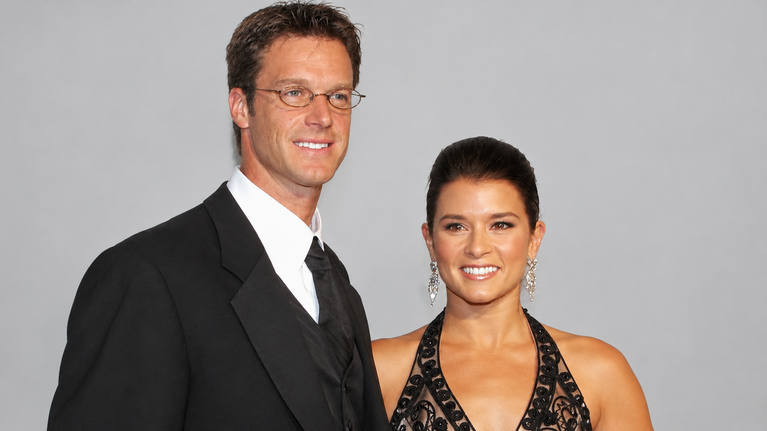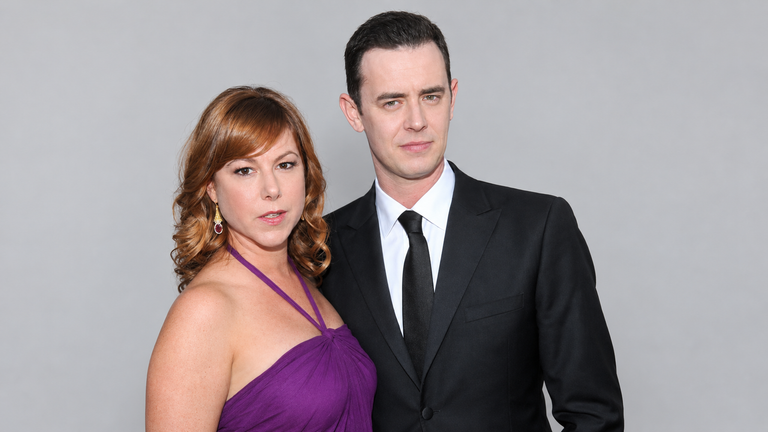
Suzanne Kay Bamford is an American writer, filmmaker, journalist, and documentary producer whose career developed across television news, magazine journalism, screenwriting, and independent film. She is also widely known because she is the only child of celebrated actress Diahann Carroll and influential jazz and television producer Monte Kay. Public records list her birth date as September 9, 1960, making her 66 years old as of September 2026.
Although her family connection brought early attention, Suzanne Kay Bamford built a professional identity of her own. She worked in news and entertainment journalism, moved into television writing, and later became a producer and co-writer on films and documentaries. Her career is especially notable for projects that explore culture, race, representation, history, and the experiences of people whose stories have often received less attention in mainstream media.
Her best-known screen credit is the South Africa-set feature Cape of Good Hope, which she co-wrote and produced with her then-husband Mark Bamford. She has also worked as an associate producer on Radioactive: The Women of Three Mile Island and as a co-producer on the 2025 documentary Sunday Best: The Untold Story of Ed Sullivan. In addition, she has been developing a documentary centered on her mother, Diahann Carroll, making her professional story closely connected to both journalism and family history.
Who Is Suzanne Kay Bamford?
Suzanne Kay Bamford is best understood as a media professional who has worked across several related creative fields rather than as a celebrity who built her reputation primarily through acting. Her documented work includes journalism, television writing, screenwriting, film production, documentary production, and public speaking. The International Center of Photography described her as a writer and filmmaker and noted her work in journalism and film.
Her career also reflects a gradual shift from reporting and entertainment coverage toward storytelling through film. After working in television news and at Essence, she became involved in screenwriting and independent production. That transition gave her an opportunity to work on stories that dealt with social relationships, race, community, history, and cultural representation.
The name Suzanne Kay Bamford can therefore appear in different forms across databases and credits. IMDb lists her professionally as Suzanne Kay, while older film credits include “Suzanne Kay Bamford.” Her listed birth name is Suzanne Patricia Ottilie Kay.
Suzanne Kay Bamford’s Early Life and Family Background
Suzanne Kay was born in Santa Monica, California, on September 9, 1960, to Diahann Carroll and Monte Kay. Carroll was already connected to the entertainment world, while Monte Kay was a prominent figure in American jazz and television. Carroll and Monte Kay were married in the 1950s and later divorced.
Her mother became one of the most important Black performers of her generation. Diahann Carroll was a stage and screen actress and singer whose career included major accomplishments in Broadway, film, and television. Her role in Julia was particularly significant because it placed a Black woman in a leading, non-stereotypical television role at a time when such representation was still unusual. Carroll later became known to another generation for Dynasty.
Her father, Monte Kay, was deeply involved in American jazz and entertainment. Historical accounts associate him with important jazz institutions and artists, including Birdland and performers such as Miles Davis, Stan Getz, Sonny Rollins, and the Modern Jazz Quartet. He later worked in television and was associated with comedian Flip Wilson and The Flip Wilson Show.
Growing up as the daughter of two highly accomplished entertainment figures inevitably placed Suzanne in a distinctive cultural environment. Yet later descriptions of her professional life show that she developed a career through education, journalism, writing, and filmmaking rather than simply relying on her family name.
Education and Journalism Career
Suzanne Kay’s education helped establish the foundation for her later career in media. Public biographies associated with her describe undergraduate study at Wesleyan University and graduate study at Columbia University’s Graduate School of Journalism. The International Center of Photography identifies her as holding a BA from Wesleyan and a master’s degree from Columbia University School of Journalism.
After graduate school, she entered television journalism. Her professional biography identifies early work at the PBS McNeil-Lehrer NewsHour, followed by work as a news writer at CNN in Atlanta. She later became an arts and entertainment editor at Essence. These positions gave her experience both in hard-news environments and in cultural reporting.
She also worked in front of the camera. A professional biography connected with Cape of Good Hope says Kay became an on-air co-anchor on ETV!’s first entertainment news program alongside Greg Kinnear and Julie Moran. That period is important because it shows the breadth of her early television work: she was not limited to writing and editing but also participated in televised entertainment coverage.
Her journalism background became useful when she moved toward scripted and documentary storytelling. News reporting, magazine editing, interviewing, and entertainment coverage all involve identifying compelling human stories, and those skills later became central to her filmmaking work.
Suzanne Kay Bamford’s Work as a Screenwriter
After her years in journalism and television, Suzanne Kay moved into television writing and eventually freelance screenwriting. A biography associated with her film career states that she wrote for several Fox television sitcoms before becoming a freelance screenwriter. IMDb also credits her as a writer on an episode of the television series Babes.
One of her early film projects was the short Hero. Public film records credit Suzanne Kay Bamford as writer and producer, with Mark Bamford as director and co-writer. The film was made around a World War II story and was circulated through film festivals before receiving television exposure.
Hero is significant in Suzanne Kay Bamford’s career because it represented a move from writing for television toward independently produced cinematic storytelling. It also became an early creative collaboration with Mark Bamford, a partnership that would continue into their later feature film work.
Cape of Good Hope and the South African Film Experience
The most important feature-film milestone in Suzanne Kay Bamford’s career is Cape of Good Hope. She co-wrote the screenplay with Mark Bamford and served as a producer. The American Film Institute’s records identify Suzanne Kay and Mark Bamford as the writers and Suzanne Kay and Genevieve Hofmeyr as producers, with Wonder View Films listed as the production company.
The film is set in post-apartheid Cape Town and follows several interconnected characters whose lives meet around an animal rescue shelter. Its story combines romance, family pressures, social divisions, and everyday life rather than treating South Africa only through the lens of political history. Critics and festival descriptions highlighted the film’s interest in ordinary people navigating a changing society.
The project grew out of the filmmakers’ decision to spend extended time in South Africa. Reporting by the Los Angeles Times noted that Suzanne Kay and Mark Bamford had initially planned to spend about a year in Cape Town but remained much longer. Their experiences there influenced the film, and they chose to work with local talent rather than recreate South African life with an American cast.
The film received recognition at several festivals and industry awards events. The National Board of Review gave the movie a Special Recognition award for excellence in filmmaking, while the project also received recognition associated with the Toronto International Film Festival and an NAACP Image Award nomination. The American Film Institute confirms Suzanne Kay’s producing and writing credits on the film.
Roger Ebert’s review also specifically identified Suzanne Kay Bamford as the film’s co-writer and co-producer with Mark Bamford. His account emphasized that the couple’s decision to remain in Cape Town shaped the authenticity of the movie and its commitment to local casting and atmosphere.
Marriage, Children, and Personal Life
Suzanne Kay Bamford was married to filmmaker Mark Bamford. IMDb lists their marriage as beginning in 1996 and ending in divorce in 2016, with two children from the relationship. Other biographical material and festival records likewise identify Suzanne Kay and Mark Bamford as a married filmmaking team who worked together professionally.
Their relationship was closely connected to their creative lives. They collaborated on Hero and Cape of Good Hope, and their move to South Africa became an important chapter in both their professional and family history. Festival documentation from the period describes Mark Bamford living in Cape Town with his wife, producer Suzanne Kay, and their children.
Suzanne has generally kept much of her family life away from the kind of public exposure associated with entertainment celebrities. Reliable sources confirm that she is the mother of two children, but detailed information about those children is not consistently documented in strong primary or institutional sources. For that reason, claims circulating online about their names or detailed personal lives should be treated cautiously.
Her relationship with her mother, Diahann Carroll, has also become an important part of her later public work. Interviews and profiles indicate that Carroll’s career and the complexity of their mother-daughter relationship have influenced Suzanne’s documentary filmmaking and personal storytelling.
Documentary Producing and Work With Social Justice Themes
In later years, Suzanne Kay moved further into documentary production. She was an associate producer on Radioactive: The Women of Three Mile Island, a documentary project examining the experiences surrounding the Three Mile Island nuclear accident through the perspectives of women connected to that history. The film’s official team page describes Kay as an award-winning filmmaker and confirms her associate-producer role.
Her work has also connected with organizations focused on social justice and cultural representation. The official Radioactive team biography says that Kay worked as a consultant for Sankofa.org, the organization founded by Harry Belafonte. Earlier public bios also describe her as a contributor to Huffington Post and as a writer maintaining a blog focused on race.
This phase of her career illustrates a consistent thread in her work. Whether through journalism, fiction, or documentary, she has repeatedly gravitated toward stories involving identity, race, representation, cultural history, and the ways individuals understand their place within larger social changes.
Sunday Best and Suzanne Kay’s Recent Film Work
One of Suzanne Kay Bamford’s most recent documented credits is Sunday Best: The Untold Story of Ed Sullivan, a documentary directed by Sacha Jenkins. The film premiered at the Tribeca Festival and examines Ed Sullivan’s influence on American television, particularly his role in bringing Black performers and other culturally significant artists into mainstream living rooms. Tribeca lists Suzanne Kay among the film’s co-producers.
The documentary became available on Netflix in 2025. The official Ed Sullivan site says the film premiered on Netflix on July 21, 2025, while Netflix describes it as a documentary about Sullivan’s role in breaking barriers by booking Black artists on his Sunday-night variety show.
Kay’s involvement is particularly fitting given her long-standing interest in race, entertainment history, and the role of television in shaping American culture. The documentary’s central subject is the relationship between entertainment and social change, a theme that overlaps with several of the subjects she has explored during her career.
The film also received significant critical attention. Rotten Tomatoes currently lists a 100% Tomatometer score from 14 critics, and TV Guide records 2026 nominations for both a News and Documentary Emmy and a Peabody Award.
Suzanne Kay’s Documentary About Diahann Carroll
Perhaps the most personal project associated with Suzanne Kay is the documentary Between Starshine and Clay: The Hidden Diary of Diahann Carroll. The project centers on Diahann Carroll and is being co-directed by Suzanne Kay and documentary filmmaker Susanne Rostock. Color Farm Media announced in 2023 that Serena and Venus Williams, along with Isha Price, joined the project as executive producers.
The film grew from material Suzanne discovered after her mother died in October 2019. According to statements connected to the project, Kay found a hidden diary that opened a new perspective on Carroll’s life and their relationship. The project is therefore more than a conventional celebrity biography: it combines archival material, family history, memory, and Suzanne’s own effort to understand her mother beyond the public image known to audiences.
The Ford Foundation also identified Between Starshine and Clay: The Hidden Diary of Diahann Carroll in connection with documentary funding, listing Susanne Rostock and Suzanne Kay as directors and Suzanne Kay among the producers. That provides independent institutional confirmation that the project has been part of an active documentary-production effort.
The documentary may ultimately become one of the defining projects of Suzanne Kay’s later career because it brings together nearly all of her professional interests: journalism, filmmaking, archival storytelling, race and representation, and the complicated private life behind a famous public figure.
Suzanne Kay Bamford’s Net Worth and Current Status
There is no dependable public source establishing Suzanne Kay Bamford’s net worth. Some biography websites publish precise figures, but those estimates are not accompanied by transparent financial records, professional disclosures, or other evidence strong enough to treat them as fact. A responsible biography should therefore avoid presenting a specific dollar amount as confirmed.
What can be established is that Suzanne remains connected to documentary and filmmaking work. Her recent credited role as co-producer on Sunday Best and her continuing involvement with the Diahann Carroll documentary demonstrate that she has remained professionally active well beyond her earlier years in television journalism and screenwriting.
At 66, Suzanne Kay’s public career is notable not because she remained constantly in front of cameras, but because she continued developing work behind them. Her path from journalism to scripted television, independent filmmaking, and documentary production illustrates a long-running commitment to storytelling.
Why Suzanne Kay Bamford Remains Notable
Suzanne Kay Bamford occupies an interesting place in American entertainment history. She is the daughter of a pioneering Black television actress, but her own professional achievements developed primarily through journalism and filmmaking. That distinction matters because her biography cannot be reduced simply to “Diahann Carroll’s daughter.”
Her work with Cape of Good Hope demonstrated a willingness to leave familiar American industry structures and make an independently driven film in South Africa. Her documentary work has allowed her to examine subjects involving history, environmental disaster, culture, race, entertainment, and social change.
Her later work on Sunday Best and the Diahann Carroll documentary further establishes her interest in the relationship between personal stories and broader cultural history. In that sense, Suzanne Kay’s career has developed around a consistent question: how can media preserve human stories that might otherwise be simplified, overlooked, or forgotten?
For readers searching for Suzanne Kay Bamford because of her famous mother, the deeper story is a career that spans several decades and multiple forms of storytelling. She inherited a connection to Hollywood, but she built her professional identity through writing, journalism, production, and documentary filmmaking.
Frequently Asked Questions
Who is Suzanne Kay Bamford?
Suzanne Kay Bamford, professionally known as Suzanne Kay, is an American writer, filmmaker, journalist, and documentary producer. She is the only child of actress Diahann Carroll and jazz and television producer Monte Kay.
How old is Suzanne Kay Bamford?
Suzanne Kay Bamford was born on September 9, 1960, in Santa Monica, California. She turned 66 on September 9, 2026.
Who are Suzanne Kay Bamford’s parents?
Her parents were actress Diahann Carroll and entertainment and jazz producer Monte Kay.
What is Suzanne Kay Bamford known for?
She is known for her work as a journalist, screenwriter, filmmaker, and producer. Her credits include Hero, Cape of Good Hope, Radioactive: The Women of Three Mile Island, and Sunday Best: The Untold Story of Ed Sullivan
Did Suzanne Kay Bamford work in journalism?
Yes. Her documented journalism career includes work at PBS’s McNeil-Lehrer NewsHour, CNN in Atlanta, and Essence magazine.
Was Suzanne Kay Bamford married?
Yes. She was married to filmmaker Mark Bamford. Public records list the marriage from 1996 until their divorce in 2016, and they have two children.
What is Suzanne Kay Bamford’s most famous film?
Her most prominent feature-film credit is Cape of Good Hope, which she co-wrote and produced with Mark Bamford. The film received festival and industry recognition, including Special Recognition from the National Board of Review.
Is Suzanne Kay Bamford making a documentary about Diahann Carroll?
Yes. She is co-directing and producing Between Starshine and Clay: The Hidden Diary of Diahann Carroll, a documentary built around her mother’s life, archives, and a diary discovered by Suzanne after Carroll’s death.